


Next
[Special Exhibition]
A World of Flowers 2026―Yokoyama Taikan’s Cherry Blossoms, Kawabata Ryūshi’s Peonies and Hayami Gyoshū’s Plum Blossoms―

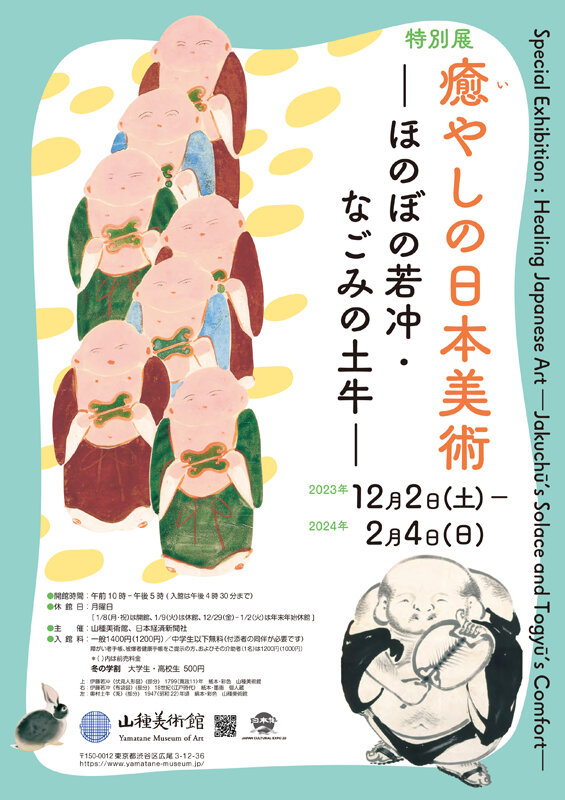
Today, when daily life is scrambled and the state of the world remains unstable, “Mindfulness,” “Well Being,” and “Chill” have become the current keywords, words bearing a sense of our emotional fluctuations. The context that has brought those terms to the fore is the need to consider our own interior state and find healing for our hearts. In these disturbing times, the Yamatane Museum of Art is holding an exhibition that will, through appreciating Japanese art, heal our spirits.
The gentle, charming images painted by Itō Jakuchū and Nagasawa Rosetsu are a delight. Jakuchū’s Hotei (private collection) and Fushimi Dolls, with their simple, kind expressions, and Rosetsu’s cute, frolicking Puppies with Chrysanthemums (private collection) are captivating. These richly humorous works bring smiles to our faces. Paintings of adorable animals and children, such as Okumura Togyū’s Rabbits and Koide Narashige’s Standing Figure of a Child, for which his own child was the model, communicate the affection that the artist has for the cherished subject of the painting. Those charming sights soothe the heart and kindle warm emotions.
Standing before Kawai Gyokudō’s After a Mountain Shower, with its depiction of the ever-inspiring Japanese natural world, and Uemura Shōen’s Listening to a Cuckoo’s Call, which makes one imagine delightful sounds, is a relaxing experience. The exhibits also include works such as Okumura Togyū’s Dainichi Buddha, which the artist himself created to soothe and heal his own heart.
Please enjoy a time of joyful healing in our pleasant galleries, where works of Japanese art that bring peace of mind are on display.
*All works are from the Yamatane Museum of Art collection unless otherwise noted.
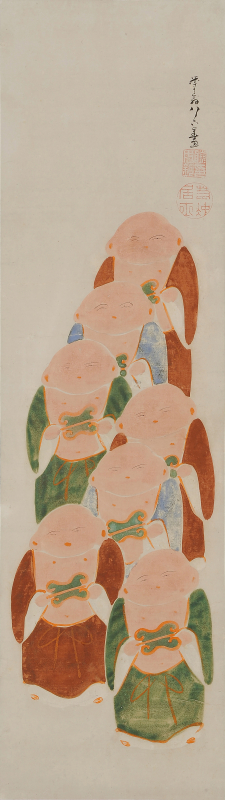 Itō Jakuchū, Fushimi Dolls
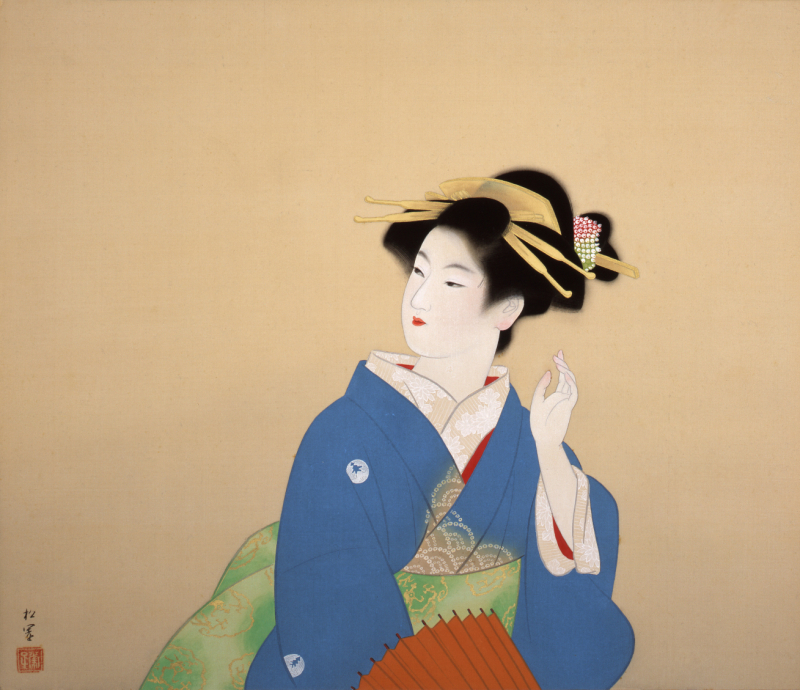 Uemura Shōen, Listening to a Cuckoo's Call
Takeuchi Seihō, Ducklings. Color on Silk, Shōwa Period, c. 1937; Yamatane Museum of Art
Nishimura Goun, Waterside in Winter. Color on Silk, Shōwa Period, 1938; Yamatane Museum of Art
Yasuda Yukihiko, Kannon, the Bodhisattva of Mercy. Color on Silk, Taishō Period, c. 1924; Yamatane Museum of Art
Okumura Togyū, A Girl Under a Loquat Tree. Color on Silk, Shōwa Period, 1930; Yamatane Museum of Art
Ono Chikkyō, Spring Fields, Autumn Ravine. Color on Silk, Showa Period, c. 1944; Yamatane Museum of Art
Omoda Seiju, Seated Figure of a Beloved Child. Color on Paper, Shōwa Period, 1931; Yamatane Museum of Art
Yamaguchi Kayō, Life Newly Born. Color on Paper, Shōwa Period, 1973; Yamatane Museum of Art
Yamamoto Kyūjin, Landscape. Color on Paper, Showa Period, 1959; Yamatane Museum of Art
Kawamoto Sueo, Autumn Glory. Color on Paper, Showa Period, 1970; Yamatane Museum of Art
Yoshida Yoshihiko, Pond's Edge in May. Color on Paper, Shōwa Period, 1976; Yamatane Museum of Art
Satō Taisei, A Pure Note. Color on Paper, Showa Period, 1947; Yamatane Museum of Art
Hirakawa Toshio, Bamboo Groves. Color on Paper, Showa Period, 1980; Yamatane Museum of Art
Matsuo Toshio, Image of Pine Tree on the Water. Color on Paper, Shōwa Period, 1990; Yamatane Museum of Art
Hayashi Isao, Camellias in the Moon Light. Color on Silk, Showa Period, 1975; Yamatane Museum of Art
Ogasawara Hajime, Spring in Honjima. Color on Paper, Heisei Period, 1991; Yamatane Museum of Art
Senju Hiroshi, Light. Color on Gold-Leafed Paper, Heisei Period, 1989; Yamatane Museum of Art
Approximately 60 works in total are to be displayed.
Works are the property of the Yamatane Museum of Art.
Adults: 1,400 yen; University and high school students: 1,100 yen; middle school and younger children: free of charge;
Disability ID holders and one accompanying person: 1,200 yen each
* Discount for those who are wearing kimono: Discount of 200 yen for adults


