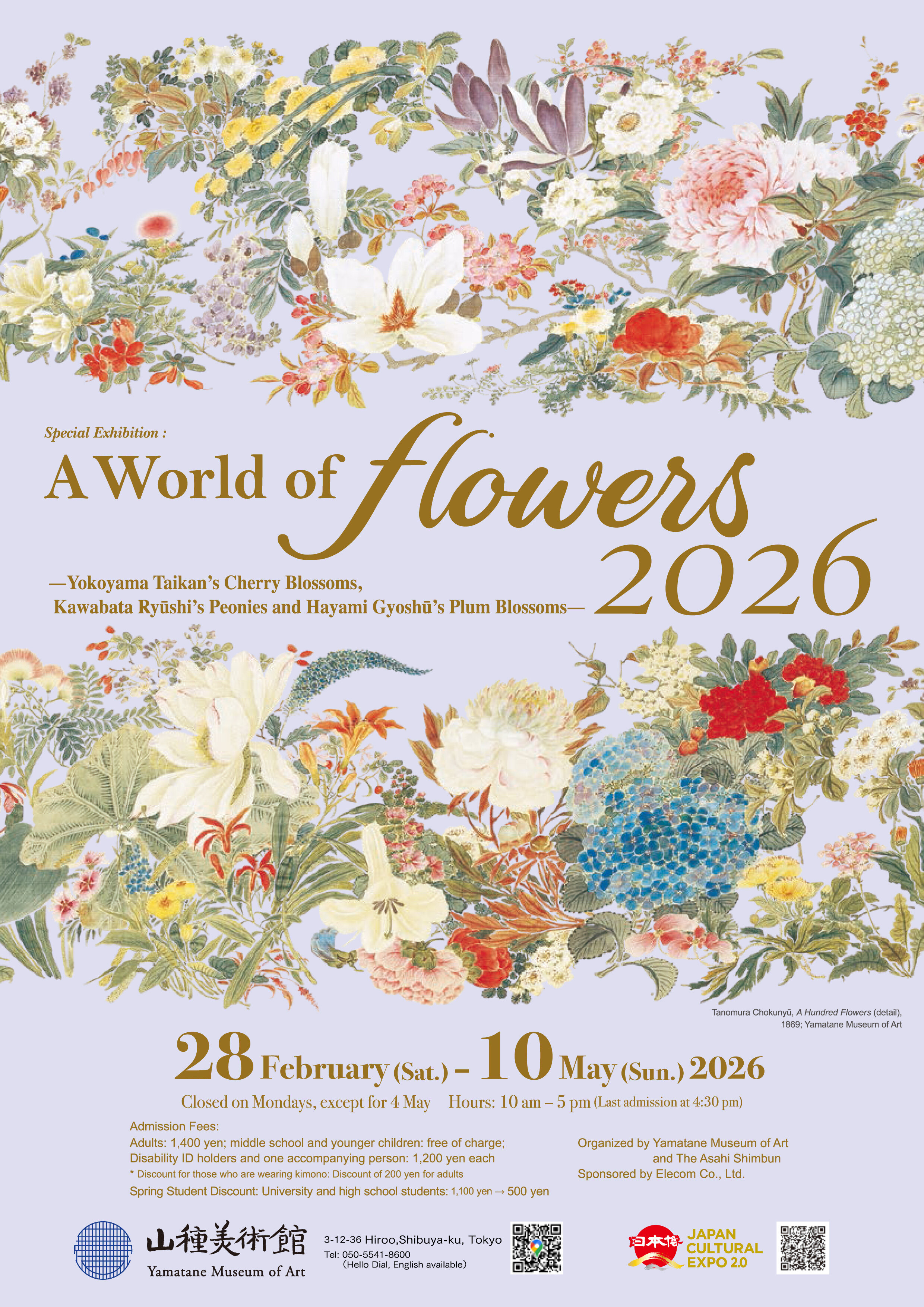
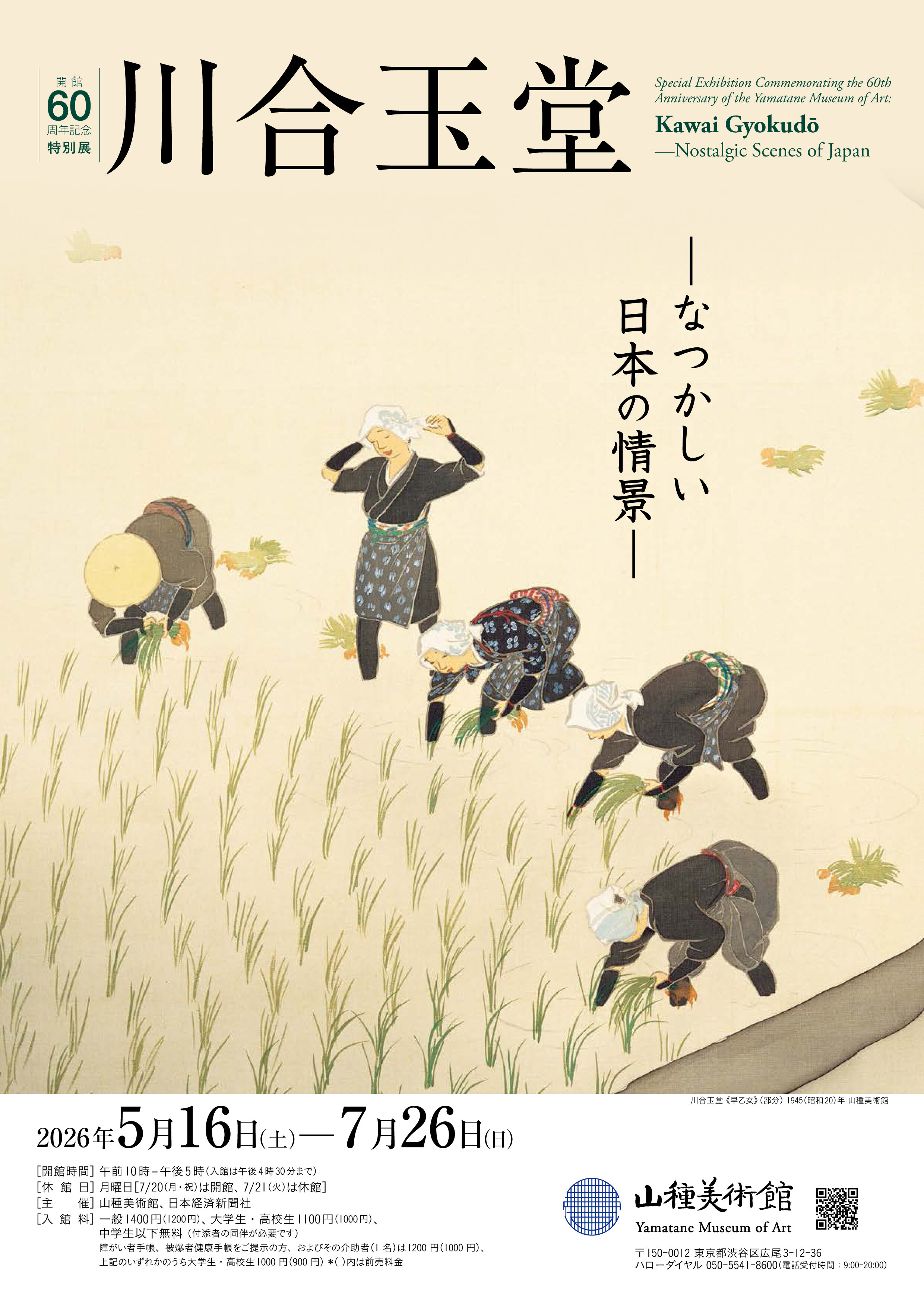
Yamatane Museum of Art

japanese

Discount ticket

banner

Welcome to the museum

The Yamatane Museum of Art, Japan’s first museum to specialize in Nihonga, opened in July of 1966 in the Kabutocho neighborhood of Nihonbashi, Tokyo. Its core collection consists of a large group of paintings donated by the museum’s founder, Taneji Yamazaki (1893-1983). Its second director, Tomiji Yamazaki (1925- ), broadened and deepened the collection, acquiring works by Hayami Gyoshu and initiating programs such as the Yamatane Museum of Art Award.

On October 1, 2009, the museum moved to its new home in Hiroo, in Tokyo’s Shibuya Ward. Here, acting on our founder’s principle of contributing through art to society and, above all, culture, the mission of the museum is collecting, presenting and interpreting Japanese art through exhibitions and research on modern and contemporary Nihonga. To present the works in our collection as effectively as possible, our new facility incorporates the latest advances in lighting, display cases, and other equipment. It is our hope that, through the museum experience, visitors will develop an intense appreciation of Nihonga’s characteristic sense of the seasons and of the distinctive materials such as mineral pigments, silk, and paper used to create these paintings.

Hiroo, a neighborhood that is remarkably verdant for its city center location, is home to many schools, embassies, and other international institutions. The museum emphasizes educational and outreach activities that are a good match for its setting, including lectures for children as well as adults and special viewings on days when the museum is closed. Our goal, as a vital center for communicating information about Japanese culture both within Japan and internationally, is to to contribute to the advancement of scholarship and to society through exhibitions backed by systematic and steady research. We hope that our visitors will appreciate and support these efforts.

Regarding art as a part of life, the museum also offers fine art gifts inspired by the exhibitions and the changing seasons in the museum shop, together with a menu of special Japanese confections (wagashi) in the café. We hope that visitors will feel at home in our museum, develop a strong connection to it, and come to visit it frequently. We will be most pleased if, through their encounters with Nihonga at this museum, visitors not only enjoy a richly rewarding experience but also rediscover Japanese culture.

We look forward to welcoming you to the Yamatane Museum of Art.

Taeko Yamazaki
Director
Yamatane Museum of Art

back to top

About the Museum

Yamatane Museum of Art was founded in 1966 by Taneji Yamazaki who has donated his numerous collection of Japanese art. The ex-chairman of the Yamatane Art Foundation, Tomiji Yamazaki collected 105 works of Hayami Gyoshu known as one of the most respected Japanese artists among scholars and collectors.

The Museum displays 6 to 7 exhibitions throughout the year by selecting paintings according to the respective topics. The collection mainly focuses on Kindai Nihonga (Modern Japanese paintings after Meiji era). The Museum also has collections of oil paintings, Ukiyoe, and Ancient Japanese Calligraphy. The wide variety and the level of the collection has a very high reputation among experts in Japan.

In 2007, as we faced the 40th anniversary, we staged the exhibition of “The Best Selection of Yamatane Museum of Art” from April 12 to July 16 (First Term Apr. 12-Jun.3, Second Term Jun.6-Jul.16). In this exhibition we displayed works of the Japanese-painting masters such as Yokoyama Taikan, Kobayashi Kokei, Hayami Gyoshu, Murakami Kagaku, Uemura Shōen, Okumura Togyu, Higashiyama Kaii, Kayama Matazo etc. The collection has many splendid paintings and a few of them has been designated as Important Cultural Properties which happens to be very rare for modern Japanese paintings.

The Museum does not exhibit the collection on permanent basis, due to the weak nature of Nihonga being easily affected by the environment. Paintings are replaced about 7-8 times a year based on respective topics to allow visitors to see as many collections as possible each year.

Please visit our museum and make your first step into the magnificent world of Nihonga.

back to top

Visitor Information

address

3-12-36 Hiroo, Shibuya-ku, Tokyo 150-0012,
Tel: 03-5777-8600 (Hello Dial, English available)

hours

10:00 a.m. - 5:00 p.m. (Last Admission at 4:30 p.m.)

Day Closed

Mondays (closed on the day after a national holiday), December 28 - January 4, and closed for exhibition installations. Call to confirm schedules.

admissions

Regular Exhibitions: Adults: 1,000 [800] yen, University and high school students: 800 [700] yen
*Special Exhibitions: addmission fees vary according to each exhibition.
Middle school and younger children: free of charge
*Figures in brackets are for groups of 20 or more.
*Disability ID Holders and one person accompanying them are admitted free of charge.

Access

by train

10-minute walk from the West Exit of JR Ebisu Station and from Exit 2 of Ebisu Station on the Tokyo Metro Hibiya Line.

by car

■ From Shibuya Station, East Exit: Take Toei Bus (Metropolitan Bus): “Gaku 03” service bound for Nisseki Medical Center (Japanese Red Cross Medical Center) and get off at “Higashi 4-chome”stop (2 minute walk from the bus stop). Bus stop ① is where you disembark, and ② is where you embark.

■ From Ebisu Station, West Exit: Take Toei Bus (Metropolitan Bus): “Gaku 06” service bound for Nisseki Medical Center (Japanese Red Cross Medical Center) and get off at “Hiroo Kōkō (Hiroo high school) Mae” stop. Bus stops ③ is where you disembark, and ④ is where you embark.

map

back to top

Collections

The Museum has a collection of over 1800 works including four Important Cultural Properties which is very rare for modern Japanese paintings. They include Hayami Gyoshu’s "Dancing in the Flames", "Falling Camellias", Takeuchi Seiho’s "Tabby Cat" and Tsubaki Chinzan’s "View of Mt. Kuno", and 18 Important Art Objects such as Iwasa Matabei’s "Court Lady Enjoying Wayside Chrisanthemums" and Sakai Houitsu’s "Autumn Plants and Quails", which are special works of Edo Period and other masterpieces.

The museum's collection is also well known for the number of works by Okumura Togyu, such as "Maelsroms in Naruto" and "Cherry Blossoms at Daigoji Temple", Yokoyama Taikan’s "Sakuemon’s House", Kobayashi Kokei’s "Scenes from the Tale of Kiyohime", Uemura Shōen’s "Scene from a Noh Play Kinuta" and Murakami Kagaku’s "Woman in the Nude".

click thumbnail to enlarge

Iwasa Matabei Iwasa Matabei
"Court Lady Enjoying Wayside Chrysanthemums"

Sakai Houitsu Sakai Houitsu
"Autumn Plants and Quails"

Tsubaki Chinzan Tsubaki Chinzan
"View of Mt. Kunozan"
(Important Cultural Property)

Takeuchi Seiho Takeuchi Seiho
"Tabby Cat"

Yokoyama Taikan Yokoyama Taikan
"Sakuemon’s House"

Uemura Shōen Uemura Shōen
"Scene from a Noh Play Kinuta"

Kobayashi Kokei Kobayashi Kokei
"Scenes from the Tale of Kiyohime"

Murakami Kagaku Murakami Kagaku
"Woman in the Nude"

Okumura Togyu Okumura Togyu
"Naruto Maelstroms"

now printing Okumura Togyu
"Cherry Blossoms at Daigo-ji Temple"

Hayami Gyoshu Hayami Gyoshu
"Dancing in the Flames"
(Important Cultural Property)

Hayami Gyoshu Hayami Gyoshu
"Camellia Petals Scattering"
(Important Cultural Property)

back to top

Exhibitions in 2010 -2011

Exhibition Periods
In 2012
【Special Exhibition】
Sakura, Sakura, Sakura 2012--Flower Viewing at the Museum
31 Mar

20 May
【Special Exhibition】
The 120th Anniversary of the Birth of Fukuda Heihachirō:
The Modern Nihonga, a Novel Sense of Design
26 May

22 Jul
Summer Vacation Event:
Traveling at the Museum A Trip from Hiroshige's Tōkaidō to Saeki Yuzō's Paris
28 July

23 Sep
【Special Exhibition】
In Memoriam, Seven Decades After His Death: A Tribute to Takeuchi Seihō and His Fellows in Kyoto
29 Sep

25 Nov
The 100th Anniversaries of the Birth of Okuda Gensō and Takayama Tatsuo:
The Masters of Nitten, The Japan Fine Arts Exhibition
1 Dec

27 Jan, 2013

* The above schedule is subject to change. Please visit our web site
www.yamatane-museum.or.jp or call Hello Dial, the general museum information
number, 03-5777-8600, for up-to-date information before your visit.

back to top

Next exhibition

Special Exhibition:
Sakura, Sakura, Sakura 2012 - Flower Viewing at the Museum!

img01.jpg
Okumura Togyū, Spring in Yoshino

31 March (Sat.) - 20 May (Sun.) 2012
(Closed on Mondays, except for 30 April)

Organized by: The Yamatane Museum of Art and The Nikkei Inc.

Hours: 10:00 - 17:00 (Last admission at 16:30)

Admission Fees: Adults: 1,200 [1,000] yen, University and High School students: 900 [800] yen,
Middle school and younger children: free of charge
*Figures in brackets are for groups of 20 or more, and advanced.
*Disability ID Holders and one person accompanying them are admitted free of charge.

Highlights of the Exhibition

  • Kano Tsunenobu, Flower-battle, Early Edo Period, 17-18th Century
  • Hashimoto Gahō, Scenes from Taiheiki (The Chronicle of Grand Pacification): Kojima Takanori, a Heroic Samurai, Meiji Period, c. 1899
  • Yokoyama Taikan, Mountain Cherry Trees, Shōwa Period, 1934
  • Tomita Keisen, Arashiyama in Spring, Taishō Period, c. 1919
  • Kobayashi Kokei, Maitreya, Shōwa Period, 1933
  • Kikuchi Keigetsu, Excursion for Viewing Cherry Blossoms, Shōwa Period, 1934
  • Okumura Togyū, Cherry Blossoms at Daigo-ji Temple, Showa Period, 1972
  • Okumura Togyū, Spring in Yoshino, Shōwa Period, 1977
  • Omoda Seiju, Spring Garden, Taishō Period, 1918
  • Hayami Gyoshū, Cherry Blossoms at Night, Shōwa Period, 1928
  • Hayami Gyoshū, Spring Evening: from a Pair of Hanging Scrolls, Dawn and Spring Evening, Shōwa Period, 1934
  • Haneishi Kōji, Priest Saigyō on Mt. Yoshino, Shōwa Period, 1987
  • Hashimoto Meiji, Cherry Tree in Morning Sun, Shōwa Period, 1970
  • Higashiyama Kaii, Calm Spring, Shōwa Period, 1968
  • Okuda Gensō, Spring Lakeside Landscape, Shōwa Period, 1986
  • Kayama Matazō, Cherry Blossoms in the Evening, Shōwa Period, 1986

*All works are the property of the Yamatane Museum of Art.

Approximately 60 works in total are to be displayed.

From 1998 to 2009, the Yamatane Museum of Art was located next to Chidorigafuchi, a Tokyo site renowned for its cherry blossoms. As a result, each year the museum held a cherry blossom-themed exhibition to coincide with the spring splendor. Since the museum's 2009 move to Hiroo, we have heard from many of our visitors that they still want to see cherry blossom paintings every year. In response to such demand, we take great pleasure in presenting a selection of works all depicting cherry blossoms.

Cherry blossoms, which bloom in full splendor and then scatter to the winds, have long been loved in Japan, and indeed; seem the very symbol of Japan. The Heian period aristocracy decorated their furnishings and everyday utensils with cherry blossom images, and the cherry blossom motifs found on Kamakura period armor and helmets variously evolved in the Muromachi period. Such motifs then frequently appeared on Momoyama and later period folding screens and furnishings. In the Genroku era of the Edo period, fashionable paintings included images of people enjoying cherry blossom viewing parties. Thus the cherry blossom has been intricately linked to the lives and history of the Japanese people. In the modern and contemporary era, many painters have continued to depict works featuring these lovely blossoms.

Throughout Japanese history, Mt. Yoshino near Nara has been renowned as a famous site for cherry blossom viewing parties, including those held by Empress Jitō (645-702) and the warlord Toyotomi Hideyoshi (1537-1598). The wild mountain cherry blossoms of Mt. Yoshino feature in works by Okumura Togyū and Ishida Takeshi's Spring in Yoshino. The tale of Kiyo-hime and Anchin, two star-crossed lovers at Dōjōji temple, and its cherry tree inspired the creativity of painters Hayami Gyoshū and Kobayashi Kokei. In the realm of poetry, among the many poems on the floral theme, Matsuo Bashō, Japan's greatest haiku poet, composed particularly eloquent verses about cherry blossoms and the memories they elicit. Taking such poetic images as his source, Yokoyama Taikan created his Mountain Cherry Trees, while the anecdote about Kojima Takanori's "loyal cherry tree" features in Hashimoto Gahō's Scenes from Taiheiki (The Chronicle of Grand Pacification): Kojima Takanori, a Heroic Samurai.

This exhibition features paintings of cherry blossoms reminiscent of the poetic expression of Heian period and later appreciation of cherry blossoms. The painters of these works made their own comments about cherry blossoms, such as Okumura Togyū who said he thought of himself as painting history paintings, Higashiyama Kaii who said that cherry blossoms float like a scent on the air, and Okuda Genso who said that cherry blossoms have subtle colorations like those seen in ancient textile fragments.

One of the works on display, Tomita Keisen's Arashiyama in Spring is presented here for the first time since restoration work was carried out on the screens, and is on public display for the first time in 15 years.

Filling the museum with paintings of the Japanese symbol flower cherry blossoms will give visitors a chance to enjoy a flower viewing session, as the works vie amongst themselves for the most glorious image of cherry blossoms.

img02.jpg
Higashiyama Kaii,
Calm Spring
img03.jpg
Omoda Seiju,
Spring Garden
img04.jpg
Hayami Gyoshū,
Cherry Blossoms at Night
img05.jpg
Yokoyama Taikan,
Mountain Cherry Trees

back to top

Next exhibition

Special Exhibition:
The 120th Anniversary of the Birth of Fukuda Heihachirō
The Modern Nihonga, a Novel Sense of Design

img201204_01.gif
Fukuda Heihachirō, Bamboo Shoots

26 May (Sat.) - 22 July (Sun.) 2012
(Closed on Mondays, except for 16 July)

Organized by: The Yamatane Museum of Art and The Nikkei Inc.

Hours: 10:00 - 17:00 (Last admission at 16:30)

Admission Fees: Adults: 1,200 [1,000] yen, University and High School students: 900 [800] yen,
Middle school and younger children: free of charge
*Figures in brackets are for groups of 20 or more, and advanced.
*Disability ID Holders and one person accompanying them are admitted free of charge.
*This exhibition admission fee is different from that of the Museum's regular exhibition.

Highlights of the Exhibition

Fukuda Heihachirō
Ripples, Color on Silk, Shōwa Period, 1932, Osaka City Museum of Modern Art◆
Rain, Color on Paper, Shōwa Period, 1953, National Museum of Modern Art, Tokyo ◇
Iris, Color on Silk, Shōwa Period, 1934, National Museum of Modern Art, Kyoto ◆
Blue Persimmons, Color on Silk, Shōwa Period, 1938, Kyoto Municipal Museum of Art
Peonies in Bloom, Color on Silk, Taishō Period, 1924
Autumn Leaves, Color on Silk, Shōwa Period, 1943
Bamboo Shoots, Color on Silk, Shōwa Period, 1947
Sweetfish, Color on Silk, Shōwa Period, 1940   and others, about 20 Heihachiro's works in total
Kawabata Ryūshi
Pearl Divers, Color on Silk, Shōwa Period, 1931 ◆
Moonlight, Color on Silk, Shōwa Period, 1933
Maeda Seison
Young of Gray Mullet, Color on Paper, Shōwa Period, 1944, National Museum of Modern Art, Tokyo ◇
A Wagtail, Color on Paper, Shōwa Period, 1971 ◆
Yamaguchi Hōshun
Flowers on the Chair, Color on Paper, Shōwa Period, 1949, National Museum of Modern Art, Tokyo
Summer Impression, Color on Paper, Shōwa Period, 1950, Private Collection
On the Table, Color on Paper, Shōwa Period, 1952
Ono Chikkyō
Early Morning, Color on Paper, Shōwa Period, 1969
Trees in Winter, Color on Paper, Shōwa Period, 1976 ◇
Tomitori Fūdō, Hillside Fields, Color on Silk, Shōwa Period, 1939
Ochiai Rōfū, Eve, Color on Paper, Taishō Period, 1919 ◇
Tokuoka Shinsen
Taros, Color on Silk, Shōwa Period, 1943, National Museum of Modern Art, Tokyo ◆
Red Carp and Golden Carp, Color on Paper, Shōwa Period, 1966 ◇
Yoshioka Kenji, Mandarin Ducks, Color on Paper, Shōwa Period, 1976 ◆

◆ 1st period (on display 5/26-6/24) ◇ 2nd period (on display 6/26-7/22) All other works are included in both periods (on display 5/26-7/22)

* Unless otherwise stated, works are in the collection of the Yamatane Museum of Art.

The year 2012 is the 120th anniversary of the birth of Fukuda Heihachirō (1892-1974), a colorist who was engaged in a quest for fresh colors and forms. To celebrate his birth, the exhibition will not only provide a retrospective of Heihachirō's oeuvre but also introduce other consciously modern works by artists active in the Taishō (1912-1926) and Shōwa (1926-1989) periods.

Since the Meiji period (1868-1912), Nihonga has both maintained its aspect as a form of painting traditional to Japan and has repeatedly implemented innovations and transformed itself in response to Western-style painting. Particularly in the period around the 1920s, in the open, free atmosphere what is known as Taishō Democracy, thanks to economic prosperity and interchanges with people in other countries, a broad-minded popular culture flourished. In the subsequent Shōwa period, work characterized by simplified forms and lucid palettes, incorporating the sensibility of the new age, emerged.

This exhibition includes about twenty works by Heihachirō, including what are regarded as his masterpieces, Ripples◆ and Rain,◇ as well as modern, sophisticated works by his contemporaries. (The works on display will be changed in the course of the exhibition.) Heihachirō's Bamboo Shoots, with its fresh combination of the rhythmical, stylized fallen leaves and the realistic bamboo shoots, Ono Chikkyō's, Early Morning, in which a fresh morning breeze is rustling through a bamboo grove, Yamaguchi Hōshun's On the Table, which combines a highly intellectual composition and a bright palette: all are works that breathed new life into Nihonga. We are delighted to introduce a large group of works filled with the creative ideas of artists who were searching for innovative styles and new modes of expression.

img1205_02.jpg
Fukuda Heihachirō, Ripples
Osaka City Museum of Modern Art
1st period (on display 5/26-6/24)
img1205_03.jpg
Fukuda Heihachirō, Rain
National Museum of Modern Art, Tokyo
2nd period (on display 6/26-7/22)
img1205_04.jpg
Fukuda Heihachirō, Iris
National Museum of Modern Art, Kyoto
1st period (on display 5/26-6/24)
img1205_05.jpg
Yamaguchi Hōshun, Summer Impression
Private Collection
img1205_06.jpg
Ono Chikkyō, Early Morning
img1205_07.jpg
Tokuoka Shinsen, Taros
National Museum of Modern Art, Tokyo
1st period (on display 5/26-6/24)

back to top


Copyright (c) Yamatane Museum of Art All Rights Reserved